
Fire Safety for Landlords: Smoke & Carbon Monoxide Alarm Rules Explained
Fire safety rules for landlords made simple. Learn what’s required for smoke and carbon monoxide alarms and how to stay compliant in your rental property.
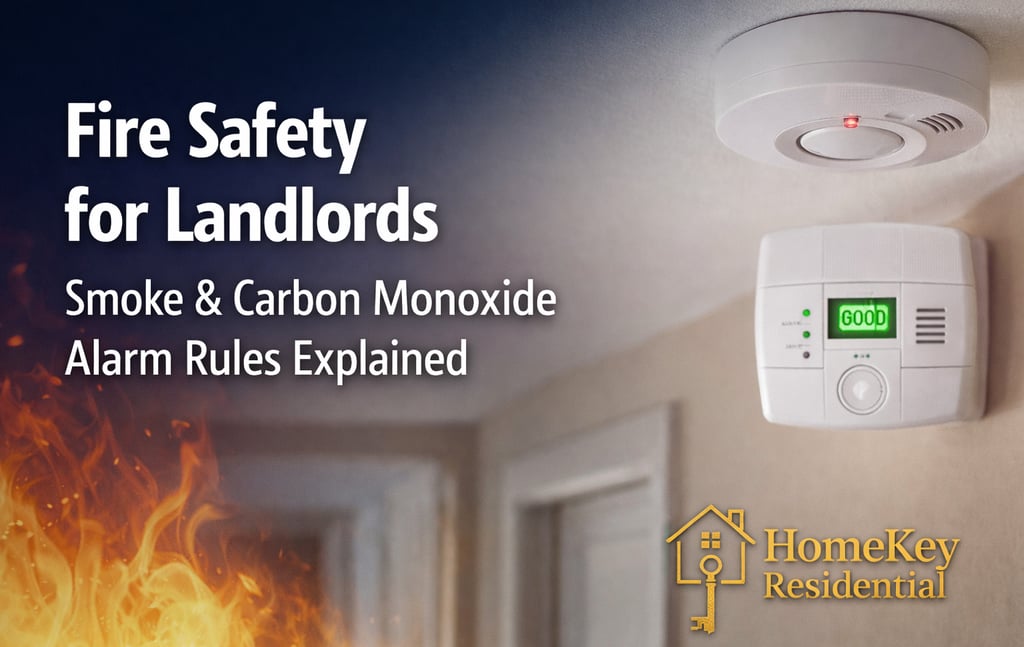
Fire safety isn’t just a legal requirement for landlords – it’s about protecting lives, property, and your investment. Smoke alarms and carbon monoxide alarms are simple, low-cost measures that can make a huge difference, yet they’re still one of the most common compliance issues we see.
Here’s a clear breakdown of what landlords are responsible for when it comes to smoke and carbon monoxide alarms, and how to stay compliant.
What Are Landlords Legally Required to Provide?
In England, landlords must ensure at least one smoke alarm is installed on every storey of a rental property that is used as living accommodation. A carbon monoxide alarm must be installed in any room used as living accommodation that contains a fixed combustion appliance, such as a gas boiler, gas fire, or solid fuel appliance.
These alarms must be in working order at the start of every new tenancy. While landlords are not legally required to test alarms during the tenancy, they are responsible for replacing faulty alarms and ensuring they are in place and working at the start.
Where Should Smoke and CO Alarms Be Fitted?
Smoke alarms should be fitted on each floor of the property, ideally in hallways and landings where they can detect smoke from bedrooms and living areas. Carbon monoxide alarms should be placed in rooms with boilers, gas fires, or solid fuel appliances. They should be positioned according to the manufacturer’s guidance, usually at head height or on the ceiling a short distance from the appliance.
Correct placement is important. Poorly positioned alarms may not activate in time or may cause nuisance alarms, leading tenants to disable them.
What About HMOs?
If your property is a House in Multiple Occupation, fire safety requirements are stricter. This may include interconnected smoke alarms, heat detectors in kitchens, fire doors, and in some cases, a full fire alarm system. The exact requirements can vary depending on the size and layout of the property and local council guidance.
It’s important not to assume standard single-let rules apply to HMOs, as the penalties for non-compliance can be serious.
What Are the Penalties for Not Complying?
Failure to comply with smoke and carbon monoxide alarm regulations can result in financial penalties and enforcement action by the local authority. More importantly, non-compliance increases the risk of injury or loss of life in the event of a fire or carbon monoxide leak.
Beyond fines, non-compliance can also impact insurance and cause issues during property inspections or if something goes wrong.
Best Practice for Landlords
Even where the law is minimal, best practice goes further. We recommend landlords ensure alarms are tested and logged at check-in, replace batteries regularly, and respond quickly if tenants report faults. Keeping photographic or written records of alarm checks at the start of a tenancy can also help protect landlords in the event of disputes.
How HomeKey Residential Helps
At HomeKey Residential, we include smoke and carbon monoxide alarm checks as part of our move-in process. We make sure alarms are present, correctly positioned, and working on day one, and we log this as part of the check-in record. This helps landlords stay compliant and provides clear records should any issues arise later.
Final Thought
Fire safety isn’t just compliance – it’s responsibility. A working smoke or carbon monoxide alarm can save lives, prevent serious damage, and protect your investment.
Thinking of Letting a Property?
If you want support with compliance, check-ins, and ongoing property management, speak to HomeKey Residential today for a free landlord consultation.